
7 Tarot En Espanol Resources for Readings and Learning
Explore 7 tarot en espanol resources for free readings, card meanings, apps, themed spreads, and reflective tarot learning.
Start my free readingPublished
Updated
16 min read
Which tarot en espanol resource should you choose if you want more than a generic card meaning? The answer depends on your purpose: an immediate free draw, a quick yes-or-no check, a card reference, a structured learning path, a mobile experience, a reflective interpretation, or a narrowly focused spread. Compare each option by Spanish-language availability, interaction, spread variety, educational depth, registration requirements, mobile access, AI involvement, and reading limits. Also keep the boundary clear: tarot can support personal reflection and decision-making, but it isn't guaranteed prediction or professional advice. TarotElya is one relevant multilingual, mobile-first option, not the only choice. The seven resources below move from broad everyday access to specialized reading styles, while preserving each service's stated trade-offs.
Table of Contents
- 1. TarotElya for an interactive entry point
- 2. Meu Tarot for structured study
- 3. SiONo for quick checks
- 4. Tarot.Free for a minimalist reference
- 5. TarotAhora for beginner guidance
- 6. Vidastral for reflective interpretation
- 7. TiradaDeTarot.com for specific themed spreads
- Tarot in Spanish: 7-Site Comparison
- Choose the Reading Style That Fits Your Question
1. TarotElya for an interactive entry point
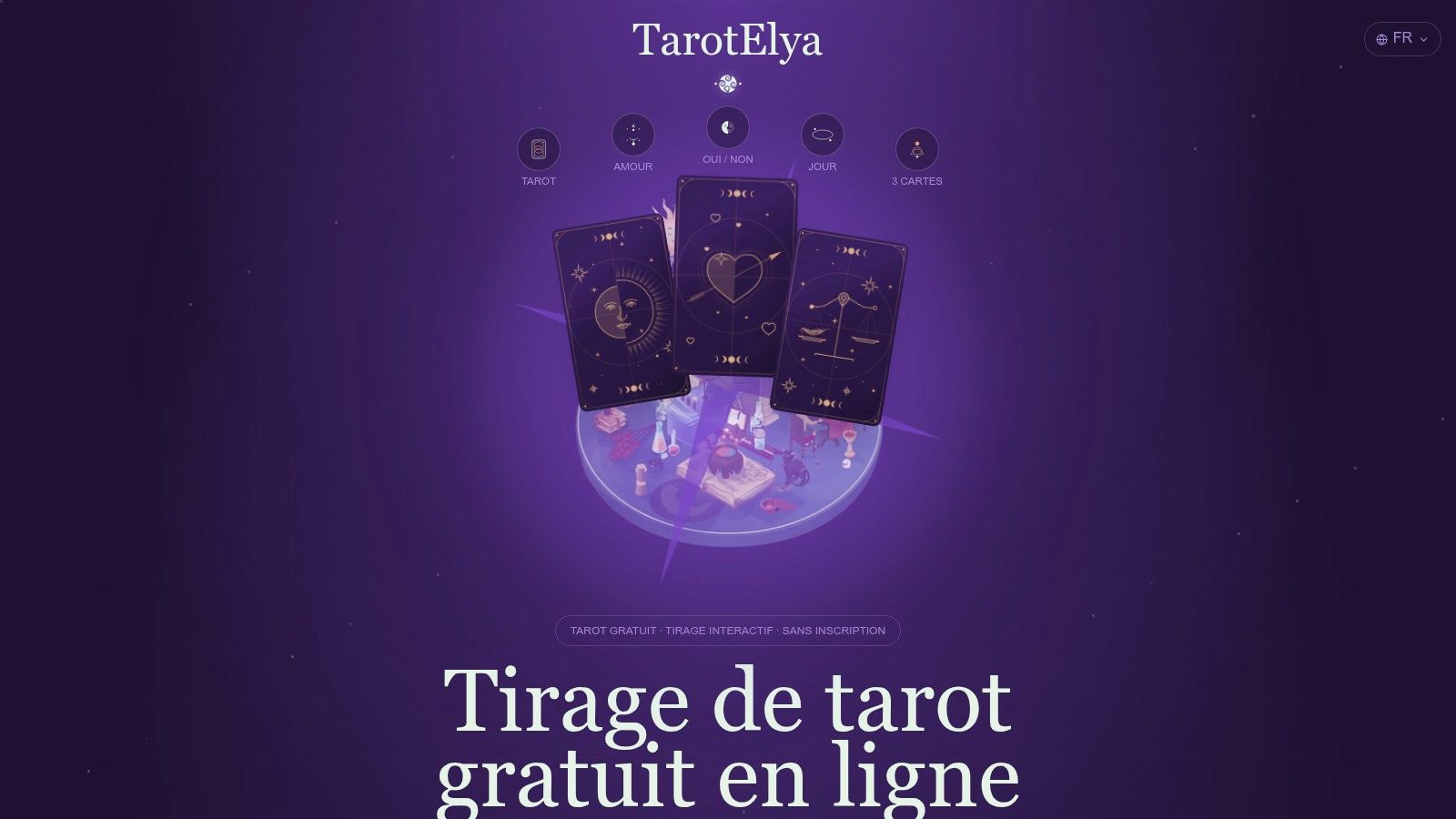
TarotElya is a strong starting point if you want a free tarot en espanol reading without registration. Its interface focuses on the physical rhythm of a reading: you choose cards, reveal them, and receive an immediate interpretation rather than clicking through a result that appears without participation. That small interaction can make the reading feel more deliberate, especially for beginners who are learning to connect a question with a card.
The Spanish experience includes practical formats for different moments. You can use a five-card general tarot reading, a five-card love reading, a one-card yes-or-no reading with advice, a daily tarot card, or a three-card spread organized around past, present, and a possible future. The site also offers Spanish readings focused on work and money, which can help you frame a concrete concern instead of asking an unbounded question about destiny.
Practical rule: Treat a yes-or-no reading as a prompt to examine your options, not as permission to ignore evidence, responsibilities, or professional guidance.
Where TarotElya supports learning
TarotElya isn't limited to instant draws. Its educational material includes Major Arcana reference pages, keywords, reversed meanings, and messages organized by areas such as love, work, and money. Combination pages and guides give beginners a way to move from “What does this card mean?” toward “How might these cards work together in this situation?”
The main readings and resources are available without an account. An optional email feature is intended to support a more detailed interpretation later when that functionality becomes available. The full mobile app, with daily readings, reminders, and enriched content, is announced as forthcoming, so users seeking a dedicated installed app may prefer a currently available alternative.
Strengths and limitations
TarotElya's main advantage is its balance of low friction, interactive drawing, multilingual access, and gradual education. The site is available in Spanish as well as several other languages, and its mobile-first design suits readers who want a private reading on a phone. Its limitation is depth in some areas, since the current knowledge base emphasizes the Major Arcana and some richer features remain connected to planned functionality.
Use TarotElya's Spanish tarot reading when you want an immediate, interactive reading that can also lead into learning. Keep the site's stated frame in mind: it's intended for adult personal reflection and entertainment, not a substitute for psychological, financial, legal, or medical advice.
2. Meu Tarot for structured study
Before drawing a card, some readers want a place to study its language. Meu Tarot brings card meanings, combinations, interactive readings, several decks, and a companion mobile app into one reference environment. This setup supports comparison across interpretations and traditions, so a reading becomes part of a learning process rather than an isolated answer.
The web tools include a daily card, yes-or-no readings, and spreads using between one and five cards. Its feature description lists 228 or more card meanings and 24,000 or more combinations on the Spanish Meu Tarot website. Those numbers describe the available catalog. Beginners should still read the surrounding context and test interpretations against their own questions rather than treating combinations as fixed formulas.
Deck variety and mobile use
The platform includes Rider-Waite, Marseille, Lenormand, and Gitano decks. Comparing them is useful for seeing how visual symbols and traditions shape interpretation. The same theme may appear through different images or conventions, so studying several systems helps prevent the assumption that every tarot or oracle deck follows identical meanings.
The website is free and does not require signup. Its browser tools suit readers who want a direct study session without installing anything. The mobile app, available for iOS and Android, adds optional AI-assisted personalized interpretations, making it more suitable for readers who want technology-supported guidance alongside their practice.
The main trade-off is the division between web and app features. Advanced AI functions are primarily connected to the mobile app, while pricing or conditions are handled through the relevant app stores and are not fully explained on the website. Choose Meu Tarot when educational depth and deck comparison matter more than receiving the quickest possible answer. Its materials can guide reflection, but symbolic suggestions still require personal context and judgment.
3. SiONo for quick checks
SiONo is built for speed. It delivers browser-based Spanish-language divination tools that let you draw cards and read results without creating an account. Available options include Tarot Español, Marseille tarot, Rider-Waite tarot, themed spreads, and several yes-or-no formats.
The platform suits a lightweight check when you already have a focused question and need a brief prompt rather than a long interpretation. For example, you might ask what deserves attention in a conversation or which attitude could help with a task. Its different tarot formats also let you compare how separate systems approach a similar subject. SiONo states that its cards are shuffled algorithmically and presents readings as entertainment and reflection, so the results work better as symbolic guidance than as guaranteed prediction.
What you gain and give up
Convenience is SiONo's main strength. You can open a tool, draw cards, and receive a concise result with little friction. The site is available in several languages and gathers multiple Spanish-language oracles in one place, which helps with quick, narrow questions.
The trade-off is learning support. Short results provide less help than a study-focused resource when you are examining symbolism, reversed cards, or relationships between cards. SiONo also lacks account and history features, so earlier draws are not preserved for later comparison.
Use the result as a starting point, not a fixed answer. If a card remains unclear, consult a focused guide such as La Luna en una lectura de sí o no. This pairing keeps SiONo in its practical role, a fast interactive check, while giving you a clearer method for reflecting on an uncertain card.
4. Tarot.Free for a minimalist reference
Tarot.Free removes much of the surrounding noise. Its Spanish interface offers a clean environment for core spreads, interactive reveals, and a card encyclopedia with upright and reversed meanings. It's a good match for readers who don't want a large portal of themed content and instead want a compact place to draw cards or verify a meaning.
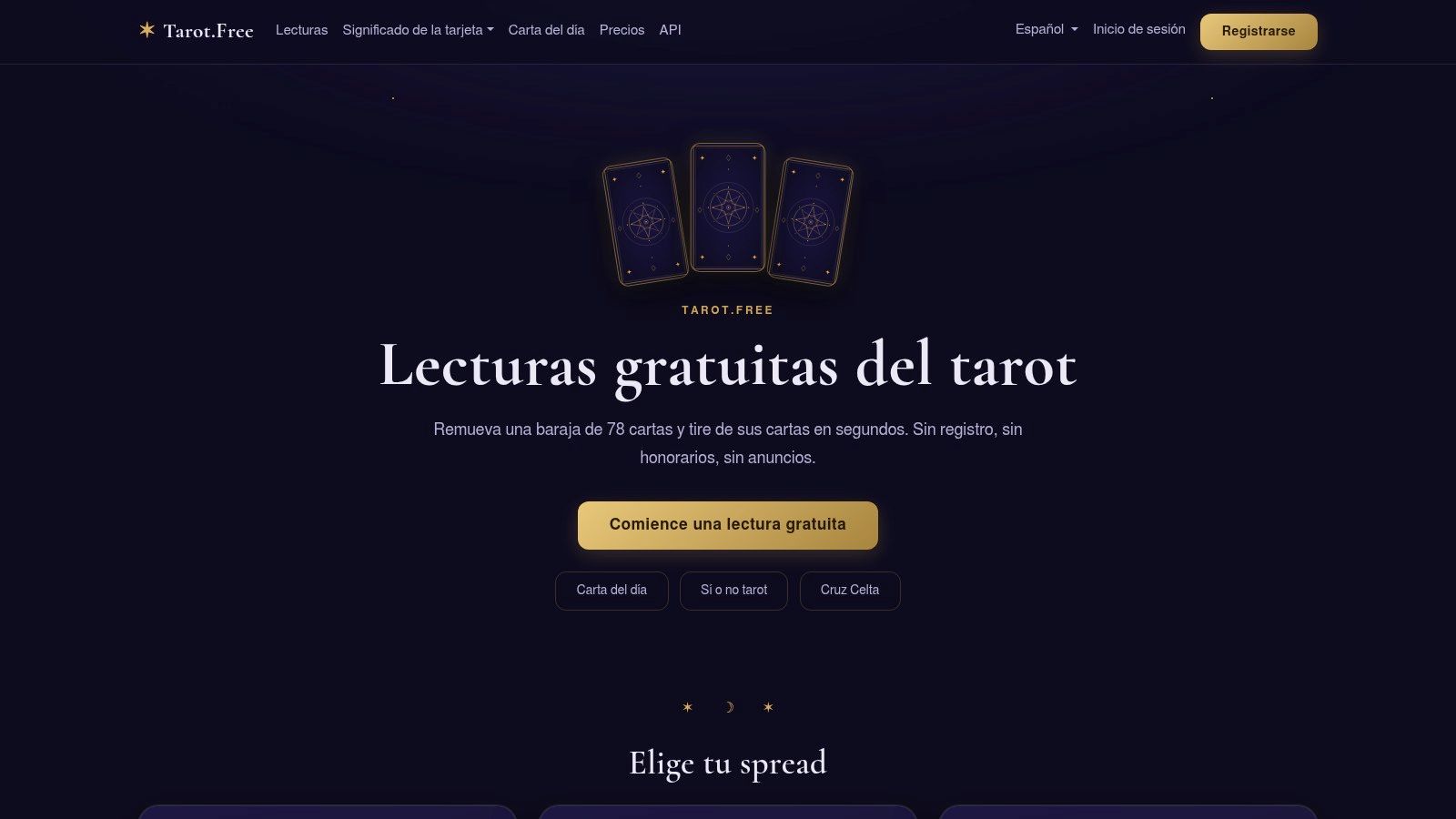
The spread selection covers a daily card, yes-or-no, a three-card past, present, and future layout, and the Celtic Cross with ten cards. The card reference includes general meanings as well as pointers for love and career, which gives beginners a practical way to adapt a card without reducing it to one rigid definition. The interactive reveal also keeps the process more engaging than a static list.
Basic access and optional depth
Standard readings and meanings don't require registration, and the site presents the basic experience without ads. Users who want more expansive interpretations can access optional AI readers described as “deep” and “master” readers through purchasable credits. The site also presents free basic AI credits when users sign up, while advanced replies require paid credits.
That model makes Tarot.Free easy to test, but you should check the current credit terms before relying on a paid interpretation. The platform focuses on core spreads and has fewer themed layouts than some alternatives, so it may feel limited if your question is highly specific.
Choose it when you value minimalism, a readable reference, and familiar spreads. It's especially practical for a learner who wants to pull a card, check upright or reversed keywords, and write their own interpretation before consulting an optional AI response.
5. TarotAhora for beginner guidance
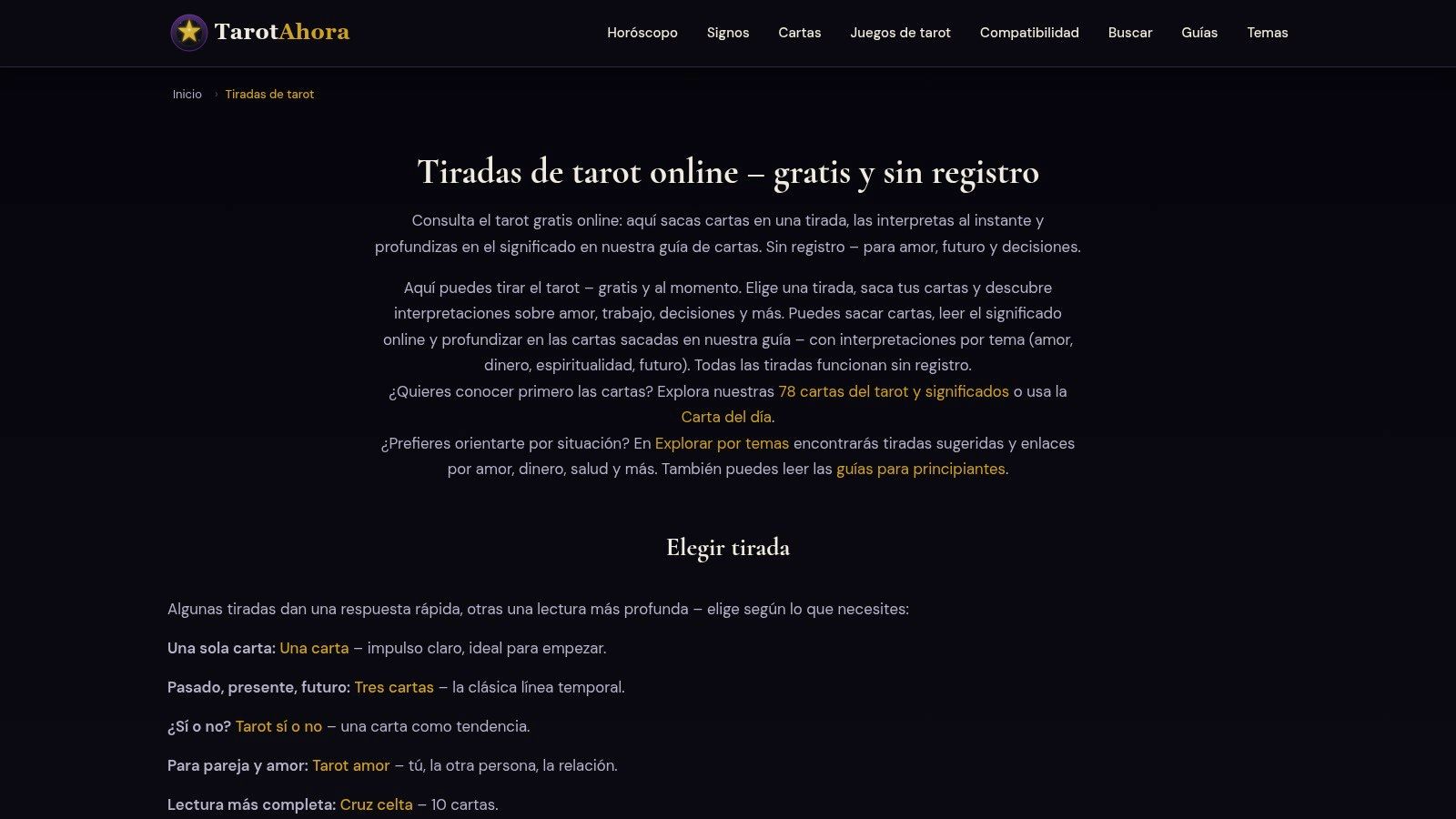
TarotAhora occupies a middle ground between instant reading and basic instruction. Its Spanish portal provides one-click draws for one, two, or three cards, along with yes-or-no, love, and Celtic Cross options. Each tool is designed for immediate use, but the site also links to a structured guide covering the deck and beginner tips.
That combination helps if you're still learning how to turn a broad interest into a workable question. Instead of typing only “love” or “work,” you can use a themed spread and then consult the guide to understand why the cards might relate to communication, obstacles, expectations, or action.
A practical beginner workflow
Start with one clear question and select the smallest spread that can address it. A one-card draw can highlight an attitude or theme. A three-card layout can separate the situation, the challenge, and a useful next step, provided you define those positions before drawing.
Then compare the reading with observable facts. If a love interpretation suggests uncertainty, look for actual patterns in communication rather than treating the card as proof of someone else's feelings. If a work reading points toward preparation, identify a real task you can complete.
TarotAhora's strengths are its accessible Spanish copy, quick formats, and integrated card guide. It also includes broader horoscope and astrology content, which may appeal to users who enjoy several forms of symbolic guidance but can distract readers who want a tarot-only environment. Its interpretations are concise, so it's better for a quick starting point than for a long, layered analysis.
For a daily prompt, try TarotElya's Spanish daily tarot, then return to TarotAhora's guide when you want to study the card's broader meanings. This pairing can help you keep a daily habit without confusing a short message with a complete reading.
6. Vidastral for reflective interpretation
Vidastral takes a slower, more reflective approach. Its Spanish and English service avoids predictive framing and focuses on plain-language essays connected to the exact cards drawn. The available modes include a general three-card reading, a three-card love and connection reading, and a one-card yes-or-no mode.
The service is a good fit if you don't want a short keyword such as “change,” “conflict,” or “opportunity.” Instead, it provides a longer interpretation designed to help you examine your response, assumptions, and possible actions. The readings use the Rider-Waite deck, so users who prefer a particular Marseille, Lenormand, or Spanish deck won't find the same variety here.
Continuity matters
Vidastral offers optional login features that preserve reading history. That can support a more thoughtful practice because you can revisit an earlier question and compare your initial interpretation with what happened. The history doesn't make the reading more predictive, but it can reveal recurring concerns, habits, or decision patterns in your own notes.
The service also discloses its AI use, identifying Claude, and explains content rules. That transparency is useful for readers who want to know how an automated interpretation is produced. Still, you should read the result as generated reflective guidance, not as a professional assessment or an objective account of another person's intentions.
Vidastral's limitation is time. Its longer essays aren't ideal when you only want a quick glance before leaving the house. The deck and scope are also narrower, with expansion of the minor arcana planned rather than presented as an existing feature. Select it when interpretive calm, continuity, and non-predictive reflection matter more than speed or deck choice.
7. TiradaDeTarot.com for specific themed spreads
TiradaDeTarot.com is designed for readers who already know the subject of their question. Its catalog includes focused layouts for love, former relationships, work, money, Celtic Cross readings, and destiny themes. A question such as “What does this person feel for me?” requires a different structure from “What should I review before changing jobs,” and themed spreads make that distinction explicit.
The site also includes Baraja Española spreads and additional tools such as runes and a palm-reading beta. That breadth can be useful for users who enjoy comparing symbolic systems, but it also means the experience extends beyond tarot. Readers who want a single, tightly defined method may prefer a more focused platform.
Specificity versus depth
AI-generated interpretations are available for basic use without signup. The site offers an optional Plan Ilimitado priced at €4.99 per month or €39 per year, according to the service's current presentation on its Spanish themed tarot spreads page. That plan removes ads and increases daily limits, so check the current terms before subscribing.
The free tier primarily emphasizes the 22 Major Arcana, with the minor arcana less represented. This can make readings easier for beginners because Major Arcana symbolism is often more immediately recognizable, but it can also reduce nuance for questions involving routine details, communication, money management, or day-to-day behavior.
Use TiradaDeTarot.com when your question is narrow and you want a layout built around that subject. For a more general situation, a simpler spread may produce a clearer reflection. You can also compare its specialized format with TarotElya's three-card reading, which organizes a question through past, present, and a possible future rather than through a single relationship or career theme.
Tarot in Spanish: 7-Site Comparison
| Tool | Implementation complexity 🔄 | Resource requirements ⚡ | Expected outcomes 📊/⭐ | Ideal use cases 💡 | Key advantages ⭐ |
|---|---|---|---|---|---|
| TarotElya | Low–Medium, mobile‑first interactive UI; simple backend for multilingual content | Minimal for core; moderate when app/email features launch | ⭐⭐⭐⭐, immediate, practical readings for daily use | Mobile daily readings, yes/no decisions, beginner learning | ⭐ Interactive UX; multilingual; structured pedagogy; free/no signup |
| Meu Tarot | Medium, multi‑deck support and large indexed library; AI in companion app | Medium–High, content library + app and optional AI compute | ⭐⭐⭐⭐, deep study + flexible readings across decks | Learners seeking structured study and multi‑deck comparisons | ⭐ Extensive library & combos; multi‑deck support; AI app option |
| SiONo | Low, in‑browser tools, algorithmic shuffles, no account required | Minimal, lightweight, fast browser execution | ⭐⭐, concise outputs for instant checks | Quick, lightweight daily checks and varied oracle browsing | ⭐ Very fast; many tarot variants in one place; no signup |
| Tarot.Free | Low–Medium, core spreads with optional purchasable AI readers | Minimal for standard use; additional cost for AI credits | ⭐⭐⭐, clean core readings; optional deeper AI analyses | Users wanting ad‑free core spreads and optional paid deep reads | ⭐ Clean UI; upright/reversed meanings; transparent AI credits |
| TarotAhora | Low, one‑click draws + integrated 78‑card guide and horoscope feed | Minimal, content + mobile‑friendly pages | ⭐⭐⭐, balanced quick readings with beginner guidance | Beginners seeking quick readings with learning resources | ⭐ Mix of quick draws and structured card guide; thematic content |
| Vidastral | Medium, AI‑generated long reflections; optional account/history | Medium–High, AI generation and user history storage | ⭐⭐⭐⭐, long (~450‑word) reflective essays, non‑predictive | Users seeking contemplative, continuity‑aware readings | ⭐ Deep, non‑predictive reflections; history saving; AI transparency |
| TiradaDeTarot.com | Medium, large catalog of themed spreads + AI interpretations; subscription handling | Medium, many layouts, AI, and payment/subscription systems | ⭐⭐⭐, targeted, question‑focused readings with AI personalization | Specific‑question spreads (love/work/money); frequent users who may subscribe | ⭐ Very wide spread catalogue; targeted layouts; affordable premium plan |
Choose the Reading Style That Fits Your Question
The best tarot en espanol resource is the one that matches the question you're asking. If you want a fast, interactive draw without registration, start with TarotElya or another no-account option. TarotElya is especially suitable when you want to choose and reveal cards yourself, then move from a reading into Major Arcana meanings, combinations, or guides.
Choose Meu Tarot when you want a substantial reference library, several decks, and a path that supports study alongside readings. TarotAhora is a more approachable alternative for beginners who want quick Spanish spreads, common themes such as love and work, and a connected card guide. If you're testing different variants or only need a brief check, SiONo keeps the experience lightweight and offers a wide selection of tools.
Tarot.Free fits readers who value a clean interface, core layouts, and upright or reversed card references. Vidastral is better for people who want a longer, non-predictive interpretation and may appreciate preserving reading history. TiradaDeTarot.com makes the most sense when the question is highly specific and you want a themed spread for relationships, former partners, work, money, or another defined topic.
Before drawing, run through a short decision process:
- Define the question: Replace “What will happen?” with a prompt about your choices, circumstances, or next useful step.
- Choose the depth: Decide whether you need a one-card signal, a structured spread, a reference entry, or a longer reflection.
- Check access needs: Confirm whether you want an app, mobile browser, saved history, or no registration.
- Review paid limits: Look at credits, subscriptions, ads, and daily-use restrictions before paying for expanded interpretations.
- Keep agency: Use the result as a prompt for reflection, not a guaranteed prediction or professional recommendation.
A useful reading should help you think more clearly about what you can observe and control. Compare the card's message with actual conversations, available evidence, practical risks, and the decisions in front of you. Tarot can suggest a perspective, but you remain responsible for choosing what to do with it.
TarotElya offers free, interactive Spanish tarot readings without mandatory registration, including daily, yes-or-no, love, work, money, and three-card formats, plus learning resources for Major Arcana meanings. Visit TarotElya to try a mobile-friendly reading and use the result as a calm starting point for personal reflection.